MAINSTREET RENEWABLES
CARBON CREDIT RESEARCH, DEVELOPMENT & COMMERCIALISATION
MainStreet Renewables Pte Ltd ("MSR"), a Singapore-based environmental asset development company focused on the research, development and commercialisation of large-scale Carbon Credit Projects.
Through our subsidiaries and regional Project Proponents, we work with customary landowners, communities, government authorities and specialist carbon-market professionals to progress projects through the development pathway toward independent validation, verification and the lawful issuance of Carbon Credit Units.

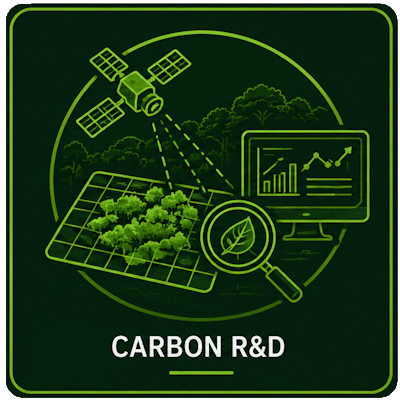
CARBON R&D
MainStreet Renewables researches and develops environmental projects capable of producing measurable and verifiable carbon outcomes under recognised methodologies, regulatory frameworks and carbon-market standards.
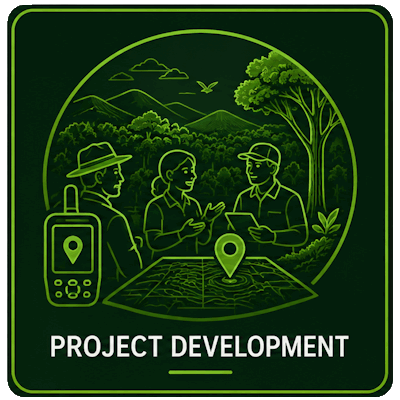
PROJECT DEVELOPMENT
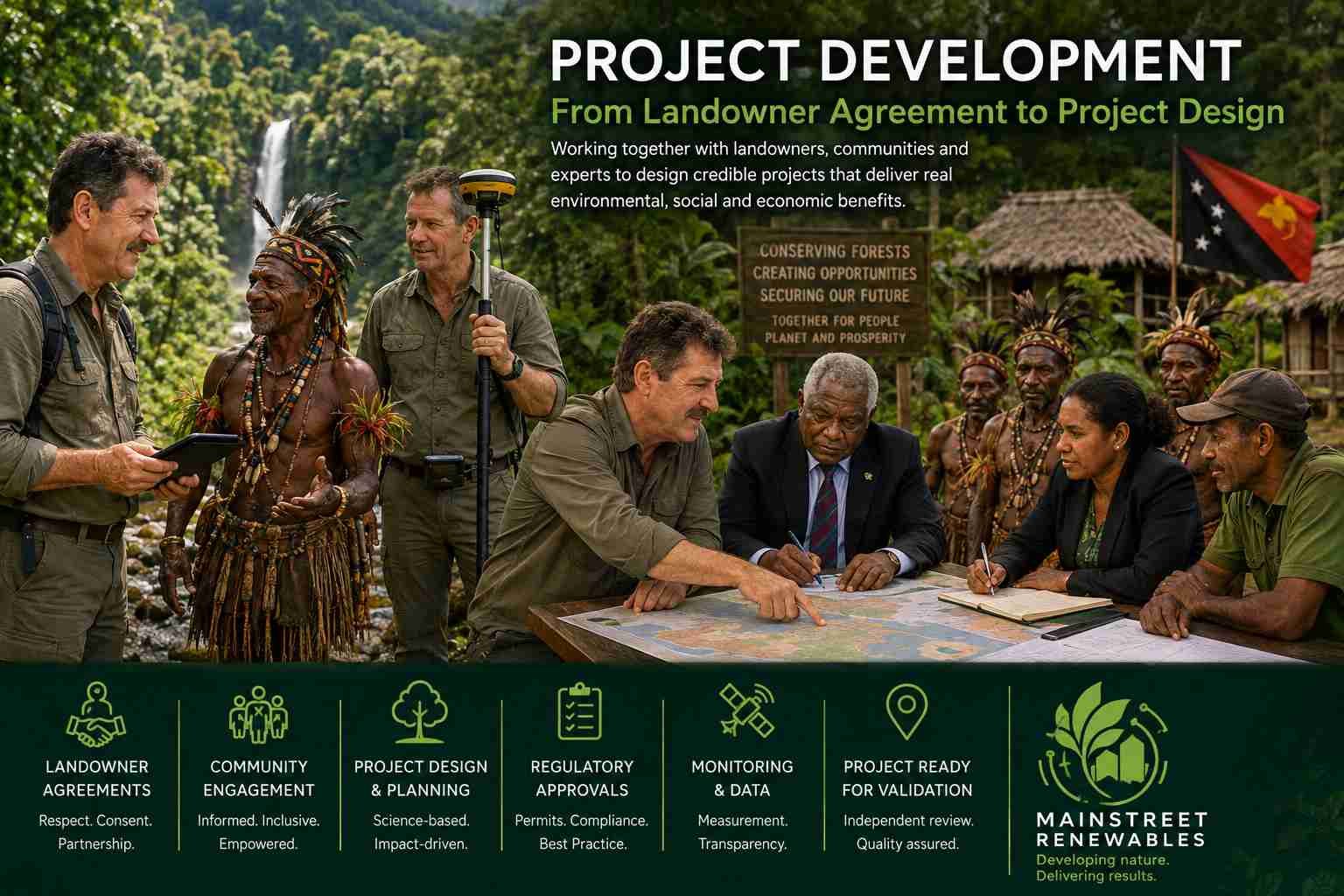
Through Hop2it Holdings and regional Project Proponents, projects are progressed through landowner agreements, community engagement, project design, government permitting, field measurement, validation and technical review.
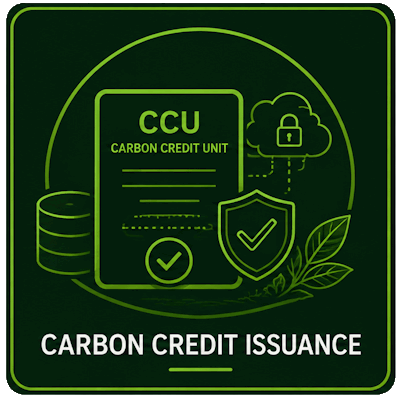
CARBON CREDIT ISSUANCE
Successful projects progress toward independent verification and the lawful issuance and serialization of Carbon Credit Units within an applicable compliant Registry.
Research. Develop. Validate. Verify. Issue.
MainStreet Renewables brings together Project ownership and development, regional expertise, customary landowner participation, technical capability and carbon-market administration to progress environmental projects through the carbon credit lifecycle.
Our role begins well before a Carbon Credit Unit exists. We identify and research potential Projects, establish the commercial and landholder framework, coordinate Project design and field work, progress regulatory requirements and support the independent technical processes required before eligible Carbon Credit Units can be issued and entered into a compliant Registry.
FREQUENTLY ASKED QUESTIONS
What does MainStreet Renewable Do?
MainStreet Renewables researches, develops, administers and commercialises Carbon Credit Projects through its subsidiaries, regional Project Proponents and specialist partners. Its work spans early-stage Project research, landholder and community engagement, Project design, regulatory progression, field measurement, validation and verification, issuance preparation and the commercial administration of eligible Carbon Credit Units.
How is the group structured?
MainStreet Renewables Pte Ltd is the Singapore-based parent and Administrative Agent. Hop2it Holdings Pte Ltd operates within the Singapore corporate structure, while Hop2it PNG Limited acts as the regional Project Proponent for Papua New Guinea Projects. This structure allows Project development activities to be undertaken locally while commercial and administrative functions are coordinated through Singapore.
What is a Carbon Credit Unit?
A Carbon Credit Unit, or CCU, is an eligible carbon credit representing one metric tonne of carbon dioxide equivalent (1 tCO₂e), subject to the applicable methodology, independent validation and verification, lawful issuance or serialization and entry into a compliant carbon Registry.
What is a Carbon Credit Future?
Carbon Credit Future, or CCF, is the commercial term used within the MainStreet Money system for a pre-issuance contractual reservation associated with a future Carbon Credit Unit. A CCF is not an already issued carbon credit. It records a reservation that may ultimately be matched with an eligible CCU following successful Project development, lawful issuance and Registry entry.
What is a Carbon Credit Future?
Carbon Credit Future, or CCF, is the commercial term used within the MainStreet Money system for a pre-issuance contractual reservation associated with a future Carbon Credit Unit. A CCF is not an already issued carbon credit. It records a reservation that may ultimately be matched with an eligible CCU following successful Project development, lawful issuance and Registry entry.
How does a project progress towards issuance?
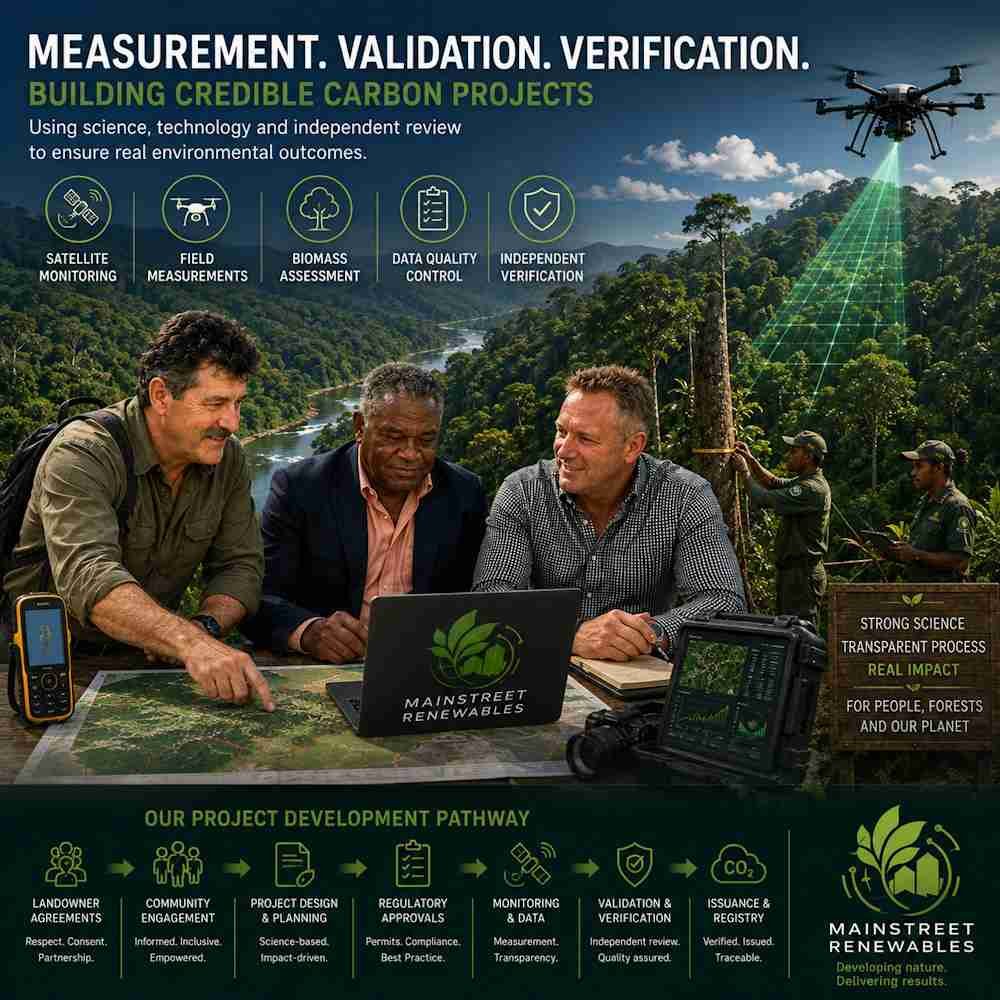
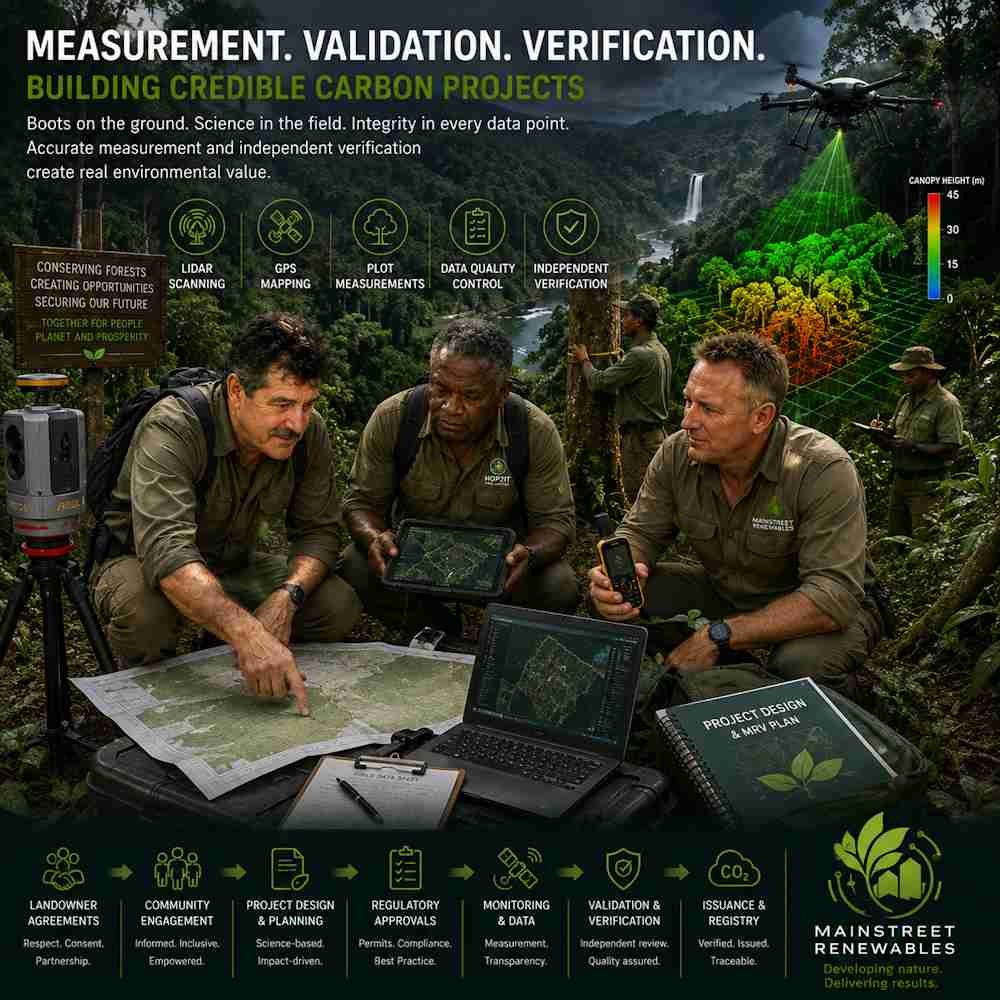
MSR administers a seven-stage development pathway: Land Contract; Community Awareness; Project Design Document; applicable CCDA Permit or approval; appointment of a Validation and Verification Body; Technical Review; and Carbon Credit Issuance. Each stage represents cumulative Project progress toward the point at which eligible CCUs may be issued and recorded in the applicable Registry.
Why are landowners and communities important?
Nature-based carbon projects depend upon the people and communities connected to the Project area. Landholder rights, community awareness, consultation, benefit-sharing, consent and long-term participation are integral parts of responsible Project development.
What happens after a CCU is issued?
Once an eligible CCU is lawfully issued or serialized and entered into the applicable Registry, it can be identified, traced and dealt with in accordance with the Registry rules and the relevant commercial arrangements. Where a CCF Reservation applies, the reservation record can then be reconciled with the corresponding issued CCU allocation.
CARBON PROJECTS BEGIN ON THE GROUND
Before carbon can become a verified environmental asset, the Project must be researched, documented, measured and developed with the people, land and regulatory framework at its foundation.
PAPUA NEW GUINEA CARBON PROJECTS
Papua New Guinea contains globally significant forest ecosystems with the potential to deliver important climate, biodiversity and community outcomes. Through Hop2it PNG Limited, the Group works with customary landowners, communities, government authorities and technical specialists to research, structure and progress qualifying Carbon Credit Projects.
Project development includes land and carbon-rights documentation, community awareness, Project design, field research, mapping and measurement, regulatory progression and preparation for independent technical assessment.
LANDOWNERS & COMMUNITIES
Successful nature-based Carbon Credit Projects begin with the people who live on and protect the land. Our development model recognises the importance of customary landowners and local communities throughout the Project lifecycle.
Community awareness, consultation, landholder agreements, benefit-sharing arrangements and ongoing participation form part of the foundation upon which credible long-term environmental Projects are developed.
MEASUREMENT. SCIENCE. EVIDENCE.
BOOTS ON THE GROUND. DATA IN THE SYSTEM.
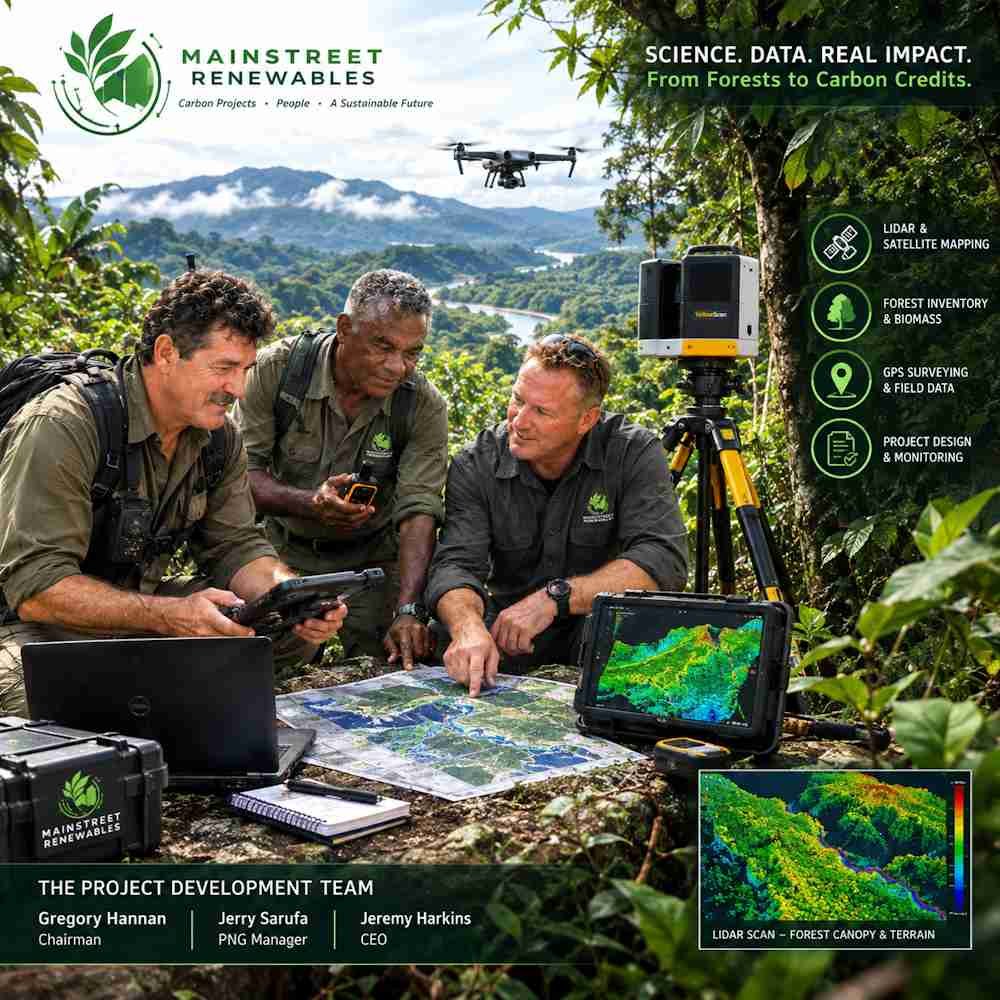
Carbon Project development requires more than identifying a forest on a map. Project areas must be researched, mapped, measured and documented using appropriate field methods, geospatial information and technical data.
MSR and its Project teams coordinate field activities that may include GPS mapping, forest inventory, LiDAR and remote-sensing data, satellite imagery, biomass assessment, Project boundary verification and the collection of information required to support the applicable methodology and Project Design Document.
FROM VERIFIED CARBON TO ISSUED CCU
Integrity. Transparency. Traceability.
The completion of Project development does not itself create a Carbon Credit Unit. Eligible carbon outcomes must progress through the applicable independent validation and verification processes, technical review, regulatory requirements and the rules of the selected carbon standard and Registry.
MSR's administrative systems are designed to maintain the link between Project development records, Member reservations where applicable, and the issued CCUs ultimately available for commercialisation.
Only when an eligible Carbon Credit Unit has been lawfully issued or serialized and entered into the applicable compliant Registry does it become an issued CCU capable of being identified, allocated, transferred or retired in accordance with the applicable rules.
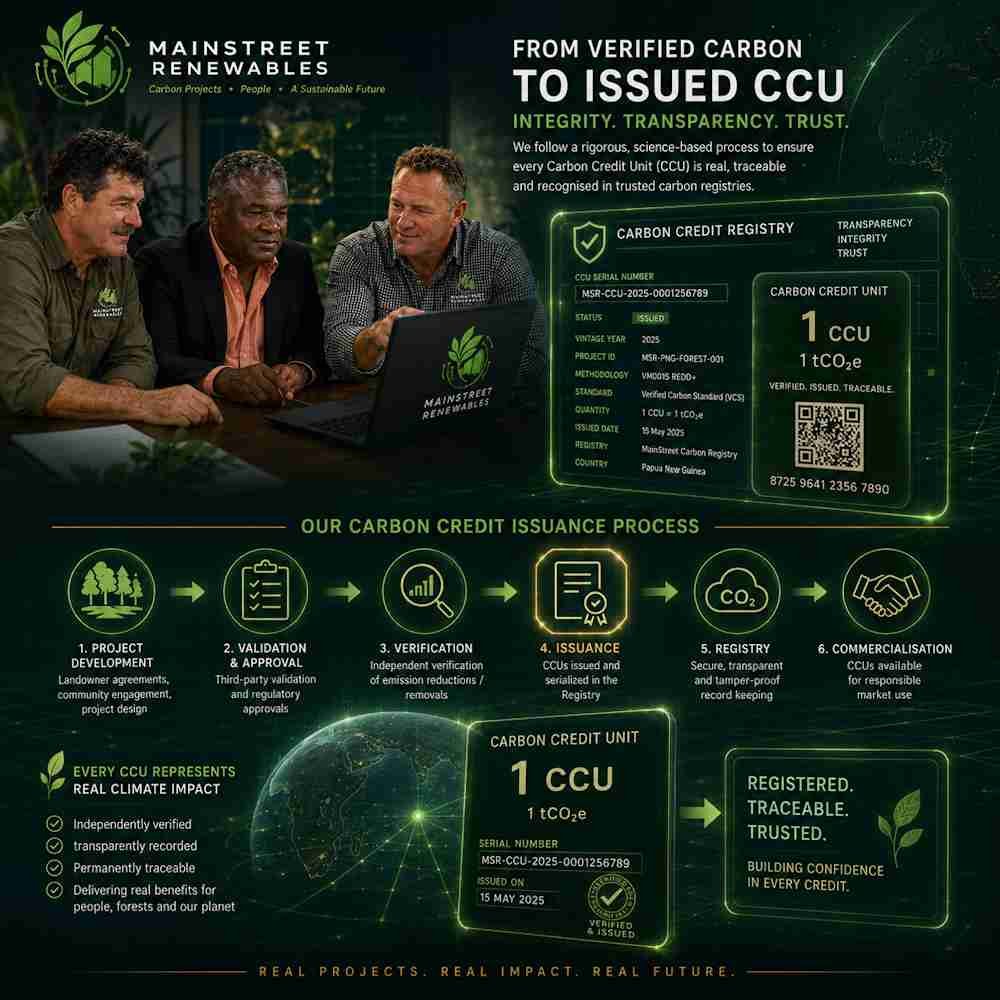
RESEARCH. DEVELOP. VERIFY. ISSUE.
TURNING ENVIRONMENTAL PROJECTS INTO MEASURABLE CARBON ASSETS
MainStreet Renewables is focused on developing credible environmental Projects through structured research, landholder and community participation, regulatory progression, scientific measurement, independent technical assessment and recognised carbon-market standards.
Our objective is to progress qualifying Projects from environmental opportunity through the development pathway toward lawfully issued, traceable Carbon Credit Units — creating long-term value for landowners, communities, Project stakeholders and the environment.